
A quote for steel forging arrives. Price: 50% below market rate.
Sounds attractive, right?
Until your project is delayed six weeks. Or worse: until a critical component fails at 1,000 meters depth.
The offshore industry learned this lesson the hard way. Yet procurement teams still face the same dilemma: choose low cost now, or avoid expensive problems later?
This isn’t about being conservative. It’s about understanding what you’re actually buying.
When a Dutch machine shop ordered forged rings from an uncertified supplier, they thought they’d outsmarted the market. The rings arrived on time. The price was excellent. The paperwork looked legitimate.
Then came final machining.
The material twisted. Tolerances disappeared. €40,000 in forged components became scrap metal.
Plus project delay costs. Plus emergency re-ordering. Plus damaged client relationships.
This scenario repeats weekly across Europe. The pattern is always similar:
Supply chain risk in metal forging isn’t theoretical. It’s a €40 billion annual problem in the oil and gas sector alone.
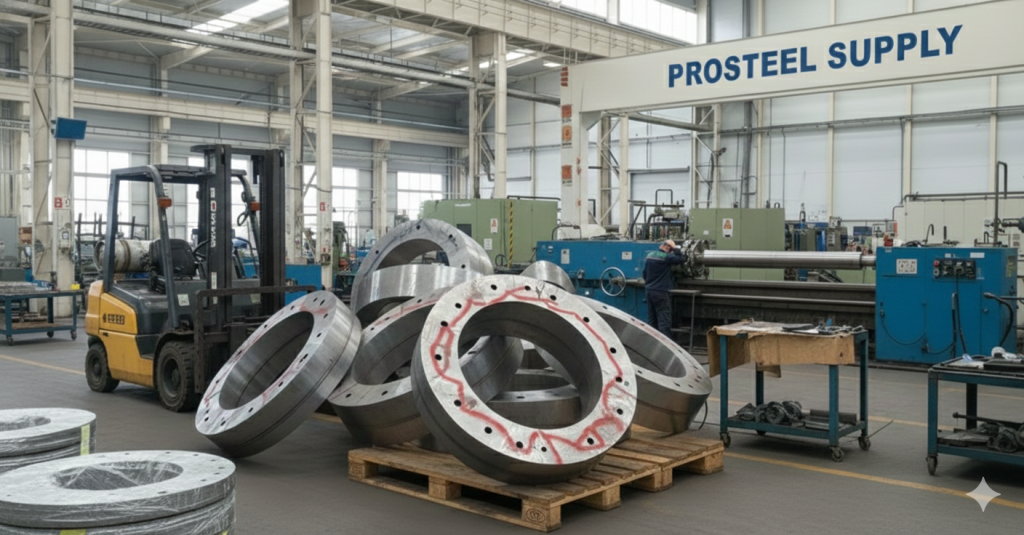
Here’s what most buyers don’t realize: A “German” forging isn’t always German.
Steel ingots travel. A Chinese ingot ships to Germany. Gets ring-rolled there. Receives light machining. Gets restamped.
Legally sold as: “Made in Germany”
Nothing illegal about this. Unless your specification requires European steel origin.
And here’s the critical part: Chinese domestic-grade steel differs significantly from export-grade material. Internal testing standards vary. Alloying consistency fluctuates.
For demanding offshore applications? This matters enormously.
Three clients discovered this when NORSOK-certified subsea components failed prematurely. Investigation revealed: base material from uncertified Chinese mills, despite “European” product labels.
The installations cost €100,000+ per day. Downtime was… unacceptable.
Metal forging isn’t ordering office supplies. It’s controlled metallurgical alchemy.
Heat a steel block to 1,000°C. Force it through massive dies. Control grain flow. Manage residual stress. Apply precise heat treatment.
Mess up any step: your component is compromised.
Most trading companies never visited a forge. They forward drawings. Collect quotes. Add margin. Hope everything works.
When problems emerge, they have no expertise to solve them.
Compare that to working with forging specialists who spent 25 years inside forge facilities. Who understand:
This knowledge prevents expensive mistakes before they happen.
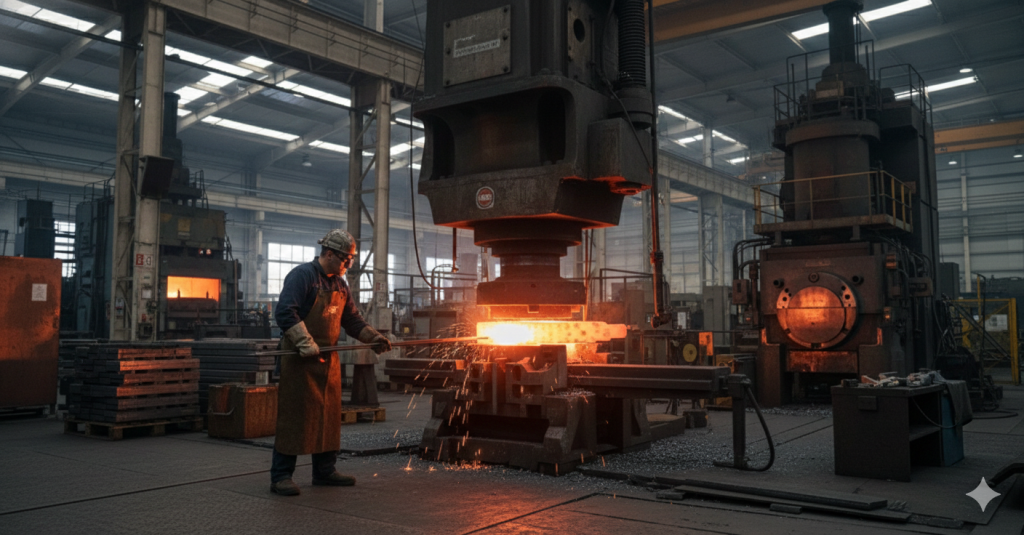
Norwegian offshore operators demand NORSOK certification for good reason. These aren’t bureaucratic hurdles, they’re hard-won lessons from decades of North Sea operations.
NORSOK M-650 qualification means a forge demonstrating consistent capability. Through witnessed testing. Independent verification. Documented manufacturing processes.
Not every forge qualifies.
For duplex and superduplex materials, for instance, only M-650 certified producers may supply NORSOK projects. This ensures proper:
One shipyard learned this when they sourced duplex flanges outside certified channels. Beautiful surface finish. Correct dimensions. Attractive price.
Material testing revealed: sigma phase contamination. Completely unsuitable for seawater service.
€250,000 worth of components: rejected.
The certified alternative would have cost €280,000. But it would have been fit for purpose.
China produces exceptional steel forging when properly specified and inspected. World-class facilities exist.
The challenge? Knowing which ones deliver consistent quality.
We work with several highly-qualified Chinese forges. For 8.5-meter diameter rings. For specialized alloys. For high-volume production.
But we implement critical safeguards:
Without these controls? You’re gambling.
One major project required 72 large duplex rings. Chinese production made economic sense. But only with continuous quality oversight.
Result: On-spec delivery. Significant cost savings. Zero failures.
The difference: professional quality management, not just procurement.
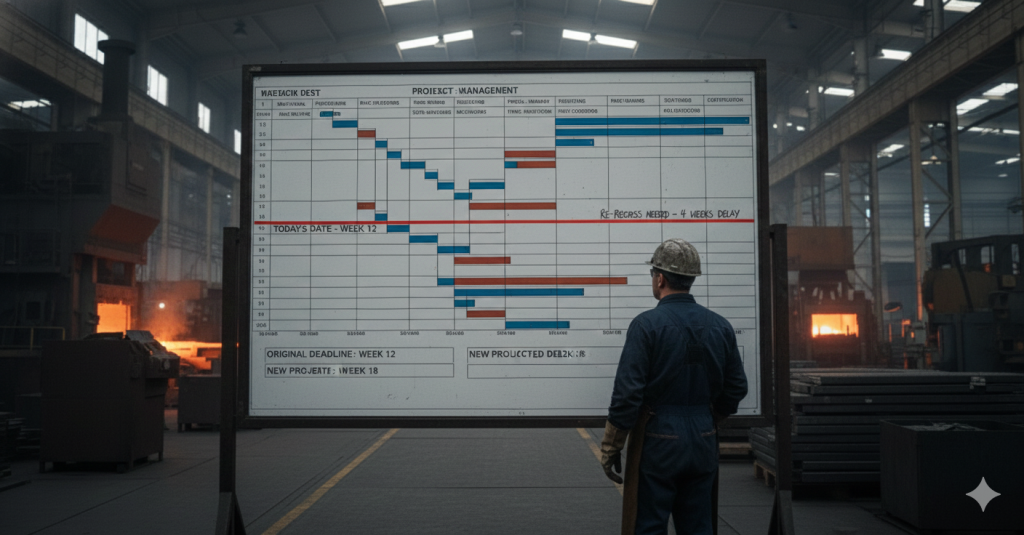
A forge quotes 10 weeks delivery. You plan accordingly.
Week 8: You inquire about progress.
Response: “Small delay, maybe 2 more weeks.”
Week 12: Still nothing.
Week 14: “Heat treatment issues, need to re-process.”
Week 18: Finally ships.
Your project timeline: destroyed.
This happens because most buyers don’t understand the forging process sequence:
That’s 9-15 weeks if nothing goes wrong.
Experienced forging suppliers build realistic schedules. Track progress weekly. Identify delays early. Activate backup options when needed.
We maintain our own follow-up schedules based on 25 years of forge experience. We know what should happen when.
If progress stalls: we catch it immediately, not at week 12.
Every forging arrives with material certificates. Most buyers glance at them, file them away.
Critical mistake.
3.1 certificates: Internal mill testing only. No independent verification.
3.2 certificates: Witnessed by third-party inspector. Independent validation.
For critical offshore applications? 3.2 is non-negotiable.
But here’s what else matters:
One client ordered NORSOK-compliant duplex material. Certificates looked perfect.
Detailed review revealed: impact testing done at wrong temperature. Heat treatment times are questionable. Traceability incomplete.
We rejected the batch. Supplier was shocked, “nobody ever checks this closely.”
Exactly the problem.
Quality forging costs more initially. No question.
But calculate total ownership cost:
Low-cost option:
Quality option:
The math is brutal. And this assumes the low-cost option merely delays your project.
If that forging fails in service? At subsea depth? On a critical installation vessel costing €500,000 per day?
Suddenly that €12,000 initial saving looks catastrophically expensive.
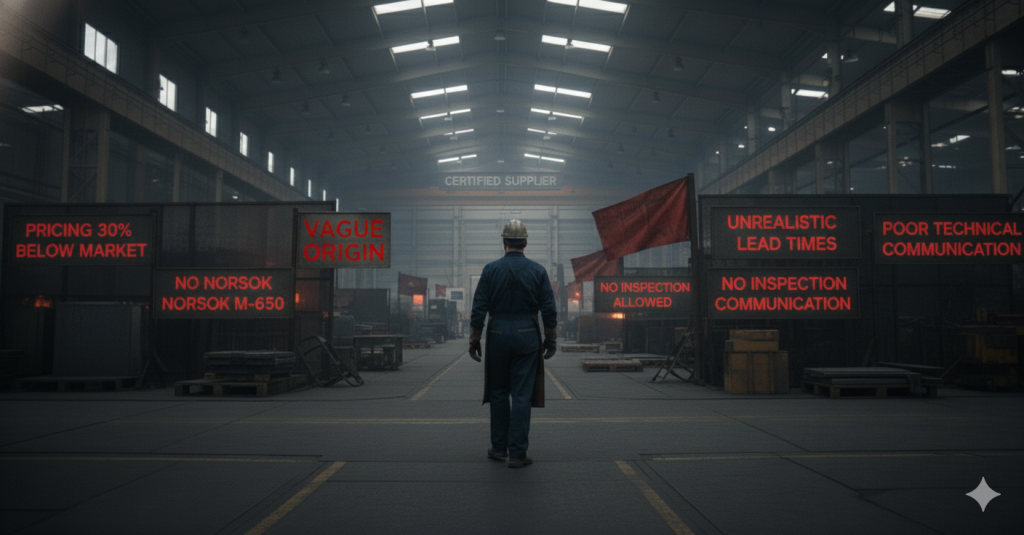
Certain warning signs demand extreme caution:
Pricing 30%+ below market: Material origin questionable, or corners being cut somewhere.
Vague about material source: “European origin” without specifying country/mill = potential risk.
No M-650 qualification for NORSOK: Cannot legally supply these materials, regardless of claims.
Reluctant to allow inspection: Professional forges welcome third-party verification.
Unrealistic lead times: 4 weeks for complex forgings? Physical impossibility.
Poor technical communication: Can’t answer basic metallurgy questions? Major concern.
We’ve seen all these red flags. Sometimes multiple simultaneously.
Smart buyers recognize them. And walk away.
Successful forging procurement requires three elements:
Most companies lack all three. They outsource to trading companies who also lack these capabilities.
Result: supply chain risk becomes supply chain disaster.
We spent 25 years inside forging operations. Not as traders, as part of the production team.
We calculated jobs. Managed production schedules. Solved metallurgical problems. Built supplier relationships across Europe and Asia.
Today we source from 25+ qualified forges. We know which specializes in what. We understand their processes intimately. We speak their technical language.
For clients, this means:
One recent project required specialized rings for offshore cranes. 10-ton forgings. Custom material specification. Tight tolerances.
Challenge: no European forge had capacity within the timeframe.
Solution: Mexican aerospace forge with relevant capability. We specified requirements precisely. Arranged third-party inspection. Validated heat treatment.
Result: On-spec delivery, on time, at 30% cost savings versus European alternative.
That’s what deep forge knowledge enables.
The quality-versus-cost dilemma resolves when you reframe it:
It’s not quality OR cost. It’s avoiding unnecessary cost through proper quality.
Every procurement decision carries risk. The question is whether you understand and manage that risk, or simply hope problems won’t emerge.
Review your current forging procurement:
If answers concern you: time to reconsider your supply chain strategy.
Because in offshore operations, there’s no such thing as cheap forgings. Only forgings that cost their true price upfront, or exponentially more later.
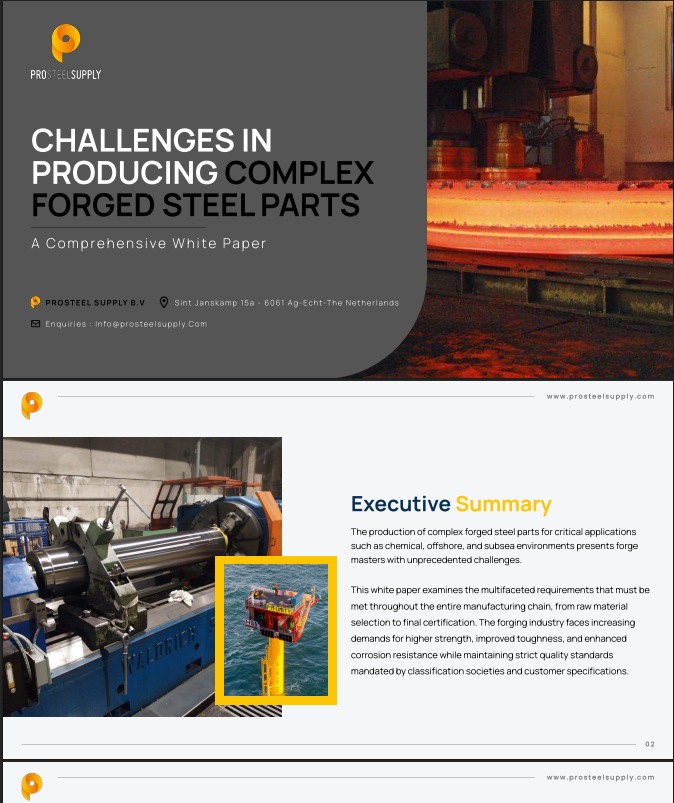
Download our whitepaper and gain practical insights into materials, quality, and supply reliability.