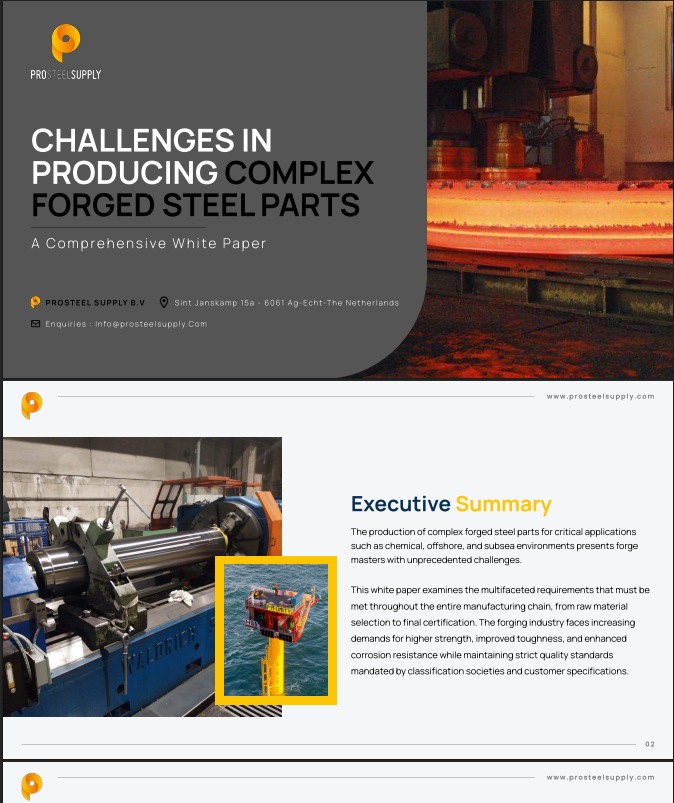
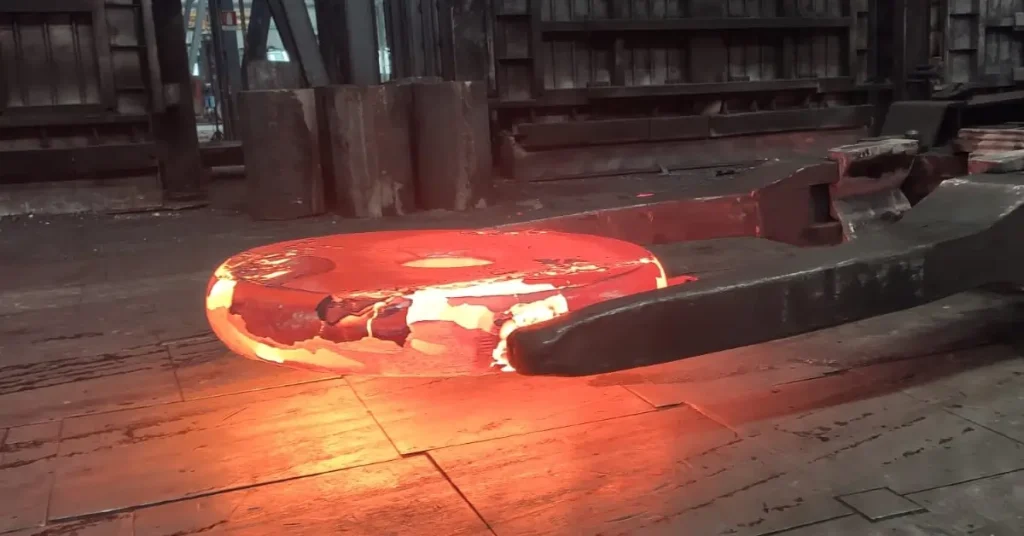
Heat treatment is one of the most powerful tools available for tailoring the properties of steel components. By controlling the temperature at which steel is heated, held, and cooled, it is possible to dramatically alter hardness, toughness, ductility, and residual stress, all without changing the chemical composition of the material.
For industrial buyers, understanding the main heat treatment processes means you can specify the right condition for your application, evaluate supplier capabilities more accurately, and avoid the costly mismatch of receiving components that meet chemistry requirements but fail in service because of inadequate heat treatment.
Why Heat Treatment of Steel Matters
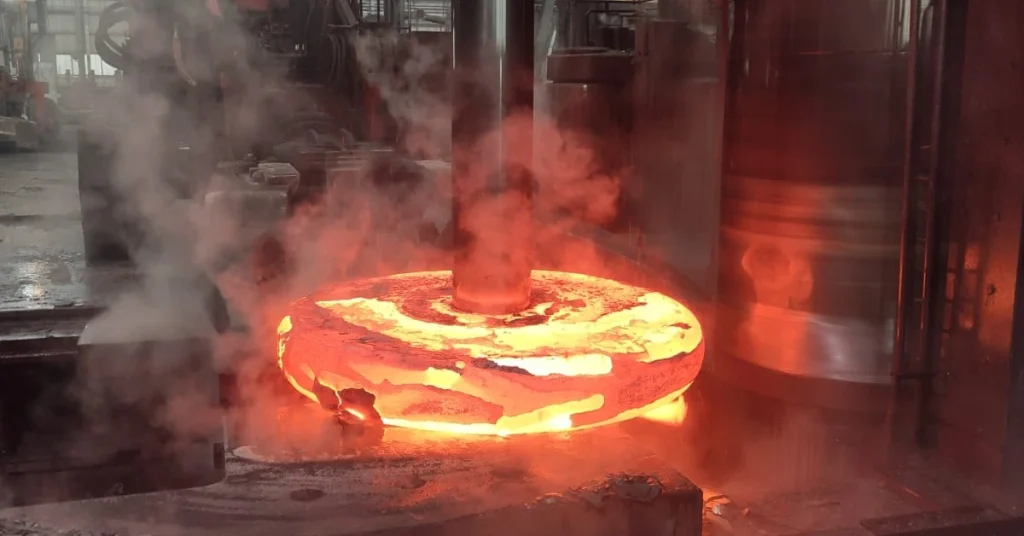
Steel in the as-rolled or as-forged condition may not meet the mechanical property requirements of its intended application. The rolling or forging process introduces residual stress, uneven microstructure, and work-hardened zones. Heat treatment relieves these problems and allows the metallurgist to target a specific balance of properties suited to the part.
The same steel grade can have vastly different properties depending on its heat treatment condition. A shaft in the normalized condition may have a yield strength of 350 MPa. The same shaft quenched and tempered to a specific hardness window may achieve over 700 MPa. Specifying the heat treatment condition is therefore as important as specifying the material grade.
The Main Heat Treatment Processes for Steel
Annealing
Annealing involves heating steel to a temperature above its critical range, holding it there to allow the microstructure to reach equilibrium, and then cooling it very slowly, typically in the furnace. The result is a soft, ductile structure with low residual stress. Annealing is used to improve machinability, restore ductility after cold working, or prepare a component for further heat treatment.
Normalizing
Normalizing follows a similar heating cycle to annealing but uses air cooling instead of furnace cooling. The faster cooling produces a finer and more uniform grain structure than annealing, and the result is a slightly harder and stronger condition. Normalizing is a common condition for structural steel components and pressure vessel forgings.
Quenching and Tempering
Quenching and tempering is the most common heat treatment for high-strength steel components. The steel is austenitized by heating to above the critical temperature, then rapidly quenched in water, oil, or polymer to trap a hard, brittle microstructure called martensite. The quenched part is then reheated to a lower tempering temperature, typically between 150 and 650 degrees Celsius, to relieve brittleness while retaining much of the hardness. The resulting microstructure is tempered martensite, which combines high strength with acceptable toughness. Quenched and tempered steel is the standard condition for high-tensile bolting, pressure-retaining parts, and structural components under dynamic loading.
Stress Relieving
Stress relieving heats the steel to a temperature below the critical range, typically 550 to 650 degrees Celsius for carbon and low-alloy steels, holds it long enough for the stress to redistribute, and then cools it slowly. No phase transformation occurs, so the hardness and strength are largely unchanged. Stress relieving is applied after welding, heavy machining, or forming to reduce distortion and the risk of stress corrosion cracking in service.
Case Hardening
Case hardening processes create a hard surface layer on a steel part while the core remains relatively soft and tough. Carburizing introduces carbon into the surface of a low-carbon steel by heating it in a carbon-rich atmosphere. Nitriding introduces nitrogen. Induction hardening selectively heats the surface with an electromagnetic coil and then quenches it. These processes are used for gears, shafts, cams, and other components that require wear resistance at the surface but toughness through the section.
Heat Treatment Furnaces and Equipment
The reliability of heat treatment depends on the furnace as much as the process parameters. Pit furnaces and car-bottom furnaces are used for large components. Salt bath furnaces give precise and uniform temperature for smaller parts. Atmosphere-controlled furnaces prevent surface oxidation during high-temperature cycles. For critical applications, furnace calibration records and thermocouple placement should be part of the quality documentation you request from your supplier.
Specifying Heat Treatment on Engineering Drawings
The most common ways to specify heat treatment on a drawing or purchase order are by condition (N for normalized, QT for quenched and tempered), by hardness range (for example, 250 to 300 HB), or by minimum mechanical property requirements (yield strength, tensile strength, elongation, Charpy impact energy at a specified test temperature). Where hardness alone is specified, be aware that the relationship between hardness and tensile strength is only approximate and varies between steel grades. For structural integrity-critical parts, always specify the full set of required mechanical properties rather than hardness alone.
Common Mistakes When Specifying Heat Treatment
- Specifying hardness without a corresponding material grade, leaving the forge shop free to choose a grade that meets hardness but not the other properties
- Forgetting to specify the test location for mechanical test specimens, which can give very different results depending on where in the forging the sample is taken
- Omitting impact test requirements for components that will be used in cold climates or cryogenic service
- Failing to specify post-weld heat treatment requirements when forgings will be welded into assemblies
Quality Heat Treatment for Industrial Forgings
Working with a supplier who has in-house heat treatment capability and documented process controls removes a significant source of variability from your supply chain. Our quality heat treatment services are performed under controlled conditions with full traceability and third-party inspection available on request.