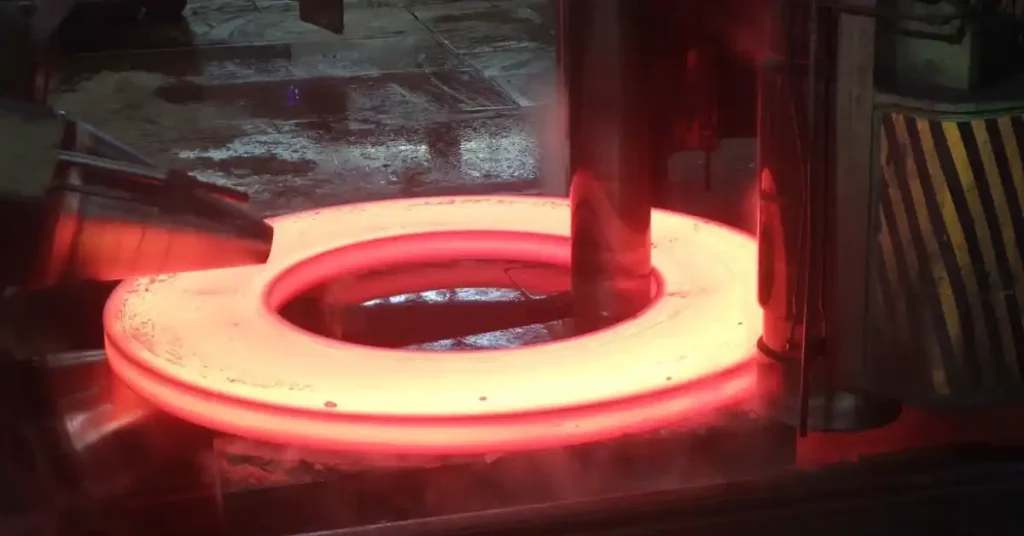
Heat treatment of stainless steel is more nuanced than heat treatment of carbon or low-alloy steel. The different families of stainless steel, austenitic, ferritic, martensitic, duplex, and precipitation-hardening, respond to heat in fundamentally different ways. Using the wrong treatment, or the right treatment with poor process control, can produce a component that looks correct but has severely compromised corrosion resistance, mechanical properties, or both.
This guide explains the heat treatment requirements for each major stainless steel family, covers the most common processes and their purposes, and describes what industrial buyers should specify and verify when ordering heat-treated stainless forgings or components.
Why Heat Treatment of Stainless Steel Requires Separate Consideration
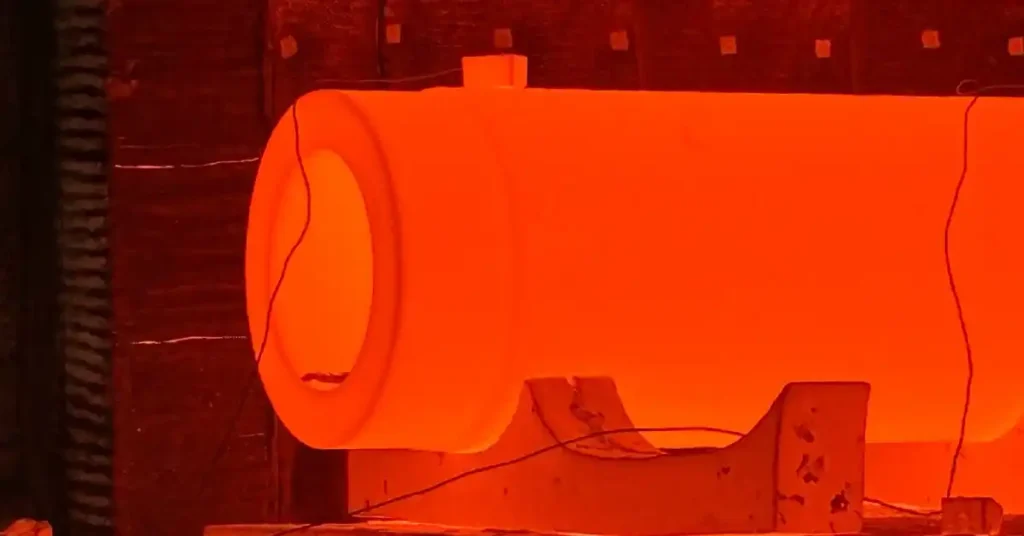
Carbon and alloy steels are hardened by rapid cooling from above the critical temperature. Most stainless steels do not behave this way. Austenitic grades, which make up the majority of industrial stainless consumption, cannot be hardened by quenching at all. They are softened by solution annealing and rapid cooling. Ferritic grades are also not hardenable by quenching in the traditional sense. Only martensitic and precipitation-hardening grades respond to quench-based hardening cycles similar to those used on alloy steel.
At the same time, stainless steel is uniquely sensitive to certain temperature ranges that have no equivalent concern in carbon steel. Sensitization, the precipitation of chromium carbides at grain boundaries, can destroy the corrosion resistance of austenitic and ferritic grades if they are held in the critical temperature range of 450 to 850 degrees Celsius for too long. Understanding these sensitivities is the foundation of specifying and verifying heat treatment for stainless.
Heat Treatment of Austenitic Stainless Steel (304, 316, 321, 347)
Solution Annealing
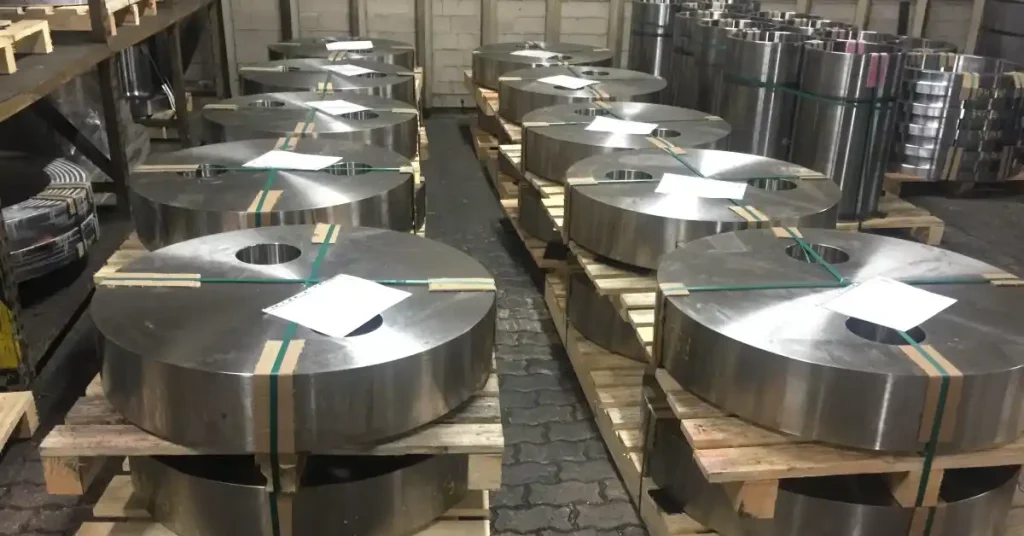
The standard heat treatment for austenitic stainless steels is solution annealing. The material is heated to a temperature typically between 1,010 and 1,120 degrees Celsius, depending on grade, held long enough for all carbides to dissolve into the austenite matrix, and then rapidly quenched in water or forced air. The rapid cooling prevents carbides from reprecipitating during cooling and preserves the corrosion resistance of the grade.
In the solution-annealed condition, austenitic stainless steels are at their softest, most ductile, and most corrosion-resistant. For most chemical processing, food industry, and offshore applications, solution-annealed and quenched is the only acceptable supply condition.
Sensitization and How to Avoid It
Sensitization occurs when austenitic stainless steel is held in the temperature range of 450 to 850 degrees Celsius. At these temperatures, carbon diffuses to grain boundaries and combines with chromium to form chromium carbides. This depletes the adjacent zones of the chromium needed to maintain corrosion resistance, creating a susceptible microstructure that can fail by intergranular corrosion in service.
Standard grades such as 304 and 316 are susceptible to sensitization if slow-cooled through the critical range after annealing, or if exposed to this range during welding or subsequent heat treatment. The remedies are using low-carbon grades (304L, 316L), using stabilized grades where titanium (321) or niobium (347) preferentially combines with the carbon, or ensuring the solution anneal is followed by sufficiently rapid cooling.
Heat Treatment of Ferritic Stainless Steel (430, 444)
Ferritic stainless steels are annealed at temperatures between 750 and 950 degrees Celsius, depending on grade, followed by air or rapid cooling. Unlike austenitic grades, ferritic stainless steels can suffer from severe grain growth at temperatures above approximately 1,100 degrees Celsius, which reduces toughness and ductility. Annealing must therefore be performed in the lower part of the temperature range to relieve stress and improve ductility without causing excessive grain growth.
Ferritic grades are also susceptible to a phenomenon called 475-degree embrittlement when held or slowly cooled through temperatures near 475 degrees Celsius. Components intended for elevated-temperature service must be designed to avoid extended exposure in this range.
Heat Treatment of Martensitic Stainless Steel (410, 420, 431)
Martensitic stainless steels are the one family that can be hardened by quenching, in a manner similar to alloy steel. The steel is austenitized at temperatures between 950 and 1,050 degrees Celsius and then quenched in oil or air to form martensite. Because martensite in the as-quenched condition is brittle, tempering is always required.
Tempering temperature selection for martensitic stainless steels is particularly important because of a secondary concern: temper embrittlement. For grades such as 410 and 420, the temperature range of 370 to 565 degrees Celsius should generally be avoided for tempering, as it produces a reduction in toughness without a corresponding benefit in hardness or corrosion resistance. Tempering above 600 degrees Celsius gives better toughness, while tempering below 300 degrees Celsius preserves hardness for wear-resistant applications.
Heat Treatment of Duplex Stainless Steel (2205, 2507)
Duplex stainless steels contain roughly equal proportions of austenite and ferrite. Their heat treatment is a solution anneal at temperatures between 1,020 and 1,100 degrees Celsius, followed by rapid water quenching. The anneal dissolves any secondary phases that form during processing and re-establishes the correct austenite-to-ferrite ratio.
Duplex grades are particularly sensitive to precipitation of intermetallic phases, especially sigma phase, when held in the range of 700 to 950 degrees Celsius. Sigma phase embrittles the steel and reduces corrosion resistance significantly. Cooling through this range must be rapid, and any heat treatment that requires holding in this range, such as post-weld heat treatment, is generally not recommended for duplex grades without specialist guidance.
Heat Treatment of Precipitation-Hardening Stainless Steel (17-4 PH, 15-5 PH)
Precipitation-hardening stainless steels achieve high strength through a two-stage process. The first stage, solution annealing, dissolves alloying additions into the matrix and produces a relatively soft condition. The second stage, aging at temperatures between approximately 480 and 620 degrees Celsius, causes fine intermetallic precipitates to form throughout the matrix, which block dislocation movement and substantially increase strength and hardness.
The aging temperature determines the final mechanical properties. Lower aging temperatures produce higher hardness and strength at the cost of ductility and toughness. Standard aging conditions are designated by the H condition code: H900 (aged at approximately 480 degrees Celsius) gives the highest strength, while H1150 (aged at approximately 620 degrees Celsius) gives better toughness at lower strength.
Specifying Heat Treatment for Stainless Steel Components
A complete heat treatment specification for a stainless steel component should include the grade and UNS number, the heat treatment condition (solution annealed, quenched and tempered, aged condition), the applicable standard (ASTM A276, ASTM A182, EN 10088, NACE MR0175 for sour service), and the required mechanical properties to be verified by test.
For pressure-retaining components, the material test report must document the heat treatment cycle, including furnace temperatures, hold times, and cooling method. For stainless forgings supplied under ASME or PED requirements, third-party review of the heat treatment records is often required at hold point or witness level.
Ensuring that your supplier has the process capability and documentation systems to support these requirements is part of the qualification process. For stainless forgings requiring documented heat treatment, our heat treatment services cover the major stainless families with full cycle documentation and material traceability.
Common Mistakes in Stainless Steel Heat Treatment
- Using a standard carbon steel quench-and-temper cycle on austenitic stainless, which does not harden it and may sensitize it if cooling is too slow
- Slow cooling austenitic stainless after annealing, which reprecipitates carbides and destroys the benefit of the anneal
- Failing to specify a maximum carbon content when ordering standard austenitic grades that will be welded or heat-treated after delivery
- Tempering martensitic stainless in the embrittlement range and receiving components with poor impact properties
- Holding duplex stainless in the sigma phase formation range during post-processing operations without checking whether properties meet specification after the fact